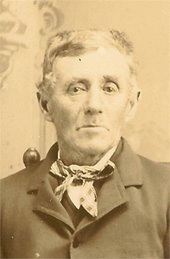
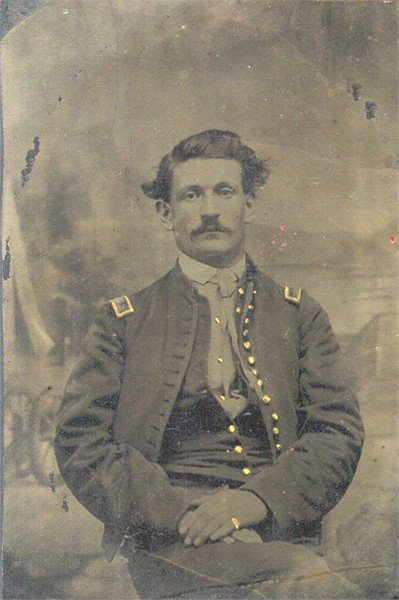
Over the weekend I was able to piece together the history of my husband's Great-grandfather. We just discovered he served in the Civil War. No one in the family realized this previously. In the 1900 US Fereral Census William was age 71 years and his second wife was just 42. She collected a Civil War pension for many years.
The Sarver Family relocated to Minnesota from Butler County, Pennsylvania. There is a Sarver Township in Butler County and even a Sarver Cemetery. William Foreman Sarver was born on the family farm in 1929, where his Father was a wagonmaker. He was married in Butler County, in 1849 to Mary Jane Davidson who was born in 1833. William and his new wife moved west to Carver County, Minnesota to homestead in the 1850's. His first wife soon died. He enlisted the first autumn of the Civil War. He was later discharged from the Army for disability after being wounded. It is not known at which battle the wound occurred. William remarried two years after the end of the war. He died on December 12th in 1912.
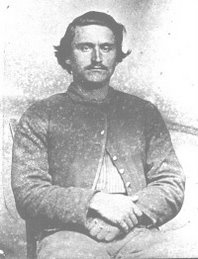
Minnesota Civil War Soldier - Private William F. Sarver, resided at Chanhassan in Carver County, Minnesota when he enlisted and was 32 years of age. His induction date was October the 5th, 1861. He served with the 4th Regiment Minnesota Infantry First Sharpshooters. His Unit served at Bennett's House on April 26th in 1865.
Minnesota 1st Company Sharpshooters History
Organized under authority of the Secretary of War at Fort Snelling, MN, and mustered into service October 5, 1861. Moved to Washington, D.C., October 6-10, 1861, and reported to Col. Berdan, at Camp of Instruction.
4th Regiment Infantry
Organized by Companies at Fort Snelling, Minnesota, as follows: Company "A" mustered in October 4, 1861. Moved to Fort Ridgly, and garrison duty there until March, 1862. Company "C" mustered in October 7, 1861. Also moved to Fort Ridgly and garrison duty there until March, 1862. Moved to Fort Abercrombie, and duty there until March, 1862 Regiment concentrated at Fort Snelling March, 1862, and moved to Benton Barracks, Mo., April 20-23, 1862. Moved to Hamburg Landing, Tenn., May 2-14. Attached to 1st Brigade, 3rd Division, Army of Mississippi, May to November, 1862. 1st Brigade, 7th Division, Left Wing 13th Army Corps (Old), Dept. of the Tennessee, to December, 1862. 1st Brigade, 7th Division, 16th Army Corps, to January, 1863. 1st Brigade, 7th Division, 17th Army Corps, to September, 1863. 1st Brigade, 2nd Division, 17th Army Corps, to December, 1863. 1st Brigade, 3rd Division, 15th Army Corps, to April, 1865. 1st Brigade, 1st Division, 15th Army Corps, to July, 1865.
Advance on and siege of Corinth, Miss., May 18-30. Pursuit to Booneville May 31-June 12. Duty at Clear Creek until August. Expedition to Rienzi and Ripley June. Moved to Jacinto August 5, and duty there until September 18. March to Iuka, Miss., September 18-19. Battle of Iuka September 19. Moved to Corinth October 1. Battle of Corinth October 3-4. Pursuit to Ripley October 5-12. Grant's Central Mississippi Campaign November, 1862, to January, 1863. Reconnaissance from Lagrange November 8-9, 1862. Duty at White's Station and Memphis, Tenn., until February, 1863. Expedition to Yazoo Pass by Moon Lake, Yazoo Pass and Coldwater and Tallahatchie Rivers February 24-April 8. Operations against Fort Pemberton and Greenwood March 13-April 5. Moved to Milliken's Bend, La., April 13-15. Movement on Bruinsburg and turning Grand Gulf April 25-30. Battle of Port Gibson, Miss., May 1. Jones' Cross Roads and Willow Springs May 3. Battles of Raymond May 12; Jackson May 14; Champion's Hill May 16; Big Black River May 17. Siege of Vicksburg May 18-July 4. Assaults on Vicksburg May 19 and 22. Expedition to Mechanicsburg May 26-June 4. Surrender of Vicksburg July 4. Garrison duty at Vicksburg until September 12. Moved to Helena, Ark., September 12, thence to Memphis, Tenn., and Corinth, Miss., and march to Chattanooga, Tenn., October 6-November 20. Operations on Memphis & Charleston Railroad in Alabama October 20-29. Chattanooga-Ringgold Campaign November 23-27. Tunnel Hill November 24-25. Mission Ridge November 25. Pursuit to Graysville November 26-27. At Bridgeport and Huntsville, Ala., until June, 1864. Operations about Whitesburg, Ala., February 2, 1864. Veterans on furlough March 5 to May 4, 1864. Moved from Huntsville, Ala., to Stevenson, Ala., thence to Kingston, Ga., June 22-25, thence to A1latoona July 5-6, and garrison duty there until November. Battle of Allatoona October 5. March to the sea November 15-December 10. Siege of Savannah, Ga., December 10-21. Campaign of the Carolinas January to April, 1865. Salkehatchie Swamps, S.C., February 2-5. South Edisto River February 9. North Edisto River February 12-13. About Columbia February 15-17. Cheraw March 3. Battle of Bentonville, N. C., March 19-21. Occupation of Goldsboro March 24. Advance on Raleigh April 10-14, and occupation. Bennett's House April 26. Surrender of Johnston and his army. March to Washington, D.C., via Richmond, Va., April 29-May 20. Grand Review May 24. Moved to Louisville, Ky., June 2-3. Duty there until July 19. Mustered out July 19 and discharged at St. Paul, Minnesota, on August 7, 1865.
Sunday, April 29, 2007

Soldier from Osceola, Wisconsin
James B Wright ,
Residence: Osceola, Wisconsin
Enlistment Date: 8 Aug 1862
Side Served: Union
State Served: Wisconsin
Service Record: Enlisted as a Private on 08 August 1862
Enlisted in 10th Light Artillery Regiment Wisconsin on 08 August 1862.
Mustered out 10th Light Artillery Regiment Wisconsin on 07 June 1865
Residence: Osceola, Wisconsin
Enlistment Date: 8 Aug 1862
Side Served: Union
State Served: Wisconsin
Service Record: Enlisted as a Private on 08 August 1862
Enlisted in 10th Light Artillery Regiment Wisconsin on 08 August 1862.
Mustered out 10th Light Artillery Regiment Wisconsin on 07 June 1865
Thursday, April 26, 2007
Even Olson

Even Olson resided in Two Rivers, Manitowoc County, Wisconsin, (the hometown of my great-grandmother) at the start of the Civil War. He was born in Norway on November 5th, 1837. His family relocated to America and settled in Wisconsin to farm the fertile soil.
Like many Scandinavians he had blue eyes, blonde hair and a fair complexion. He was 5' 6" and 28 years of age when he enlisted on September 21st, 1864. He signed on as a private for one year of duty in the 27th Wisconsin Infantry Company K.
The History of the 29th Wisconsin Infantry Regiment
The Twenty-ninth Wisconsin Infantry Regiment was organized at Camp Randall, Madison, Wisconsin, and mustered into the service of the United States Union Army on September 27th, 1862. The Regiment left the state on November 2nd, reaching Helena, Arkansas, where it engaged in operations in the interior of the state and expeditions up the White River, to Friars Point in Mississippi, and as far as Yazoo Pass.
The regiment left Arkansas on April 10th, in the movement against Vicksburg. Crossing the Mississippi River on April 30th the unit moved to the front and took part in the battle of Fort Gibson on May Day. Serving under General Grant the regiment engaged in the battle of Champions Hill on May 16th, and then took position in the trenches in the rear of Vicksburg, and continued on in the siege until the surrender on July 4th, 1863. The day after the surrender the 29th was detailed to took part in the Jackson Campaign, running from July 5th to the 25th. In August accompanying other forces, it occupied Natchez, Mississippi, and from there moved into southern Louisiana. It was engaged in many expeditions about New Ibrin, and in the early part of January of 1864, joined an expedition to Texas on the Rio Grande, returning to New Orleans by the end of February.
It was next assigned to duty with the forces engaged in the Red River expedition, March 10th-22nd, 1864, and participated in that campaign, and saw action in the battle of Sabine Cross Roads on April 8th, 1864. As a part of the work of the Twenty-ninth in this campaign it assisted Colonel Bailey in constructing a dam across the Red River which saved the Union gun boats. After the abandonment of the movement the regiment was transferred to southern Louisiana where it remained until September. Then the unit was transferred back to Arkansas, with headquarters at Little Rock, from which the regiment accompanied many expeditions in frequent contact with the enemy.
In January of 1865, the Twenty-ninth was again ordered to New Orleans as a part of the forces collecting for the reduction of the fortifications at Mobile, Alabama. This campaign lasting from March 17th to the 4th of May in 1865. It included the reduction of Spanish Fort and the capture of Fort Blakely. The war being practically over, the regiment remained in southern Louisiana until the 22th of June, when it was mustered out of the service of the United States, returning to Madison, and was disbanded on July 17th, 1865.
The regiment left Arkansas on April 10th, in the movement against Vicksburg. Crossing the Mississippi River on April 30th the unit moved to the front and took part in the battle of Fort Gibson on May Day. Serving under General Grant the regiment engaged in the battle of Champions Hill on May 16th, and then took position in the trenches in the rear of Vicksburg, and continued on in the siege until the surrender on July 4th, 1863. The day after the surrender the 29th was detailed to took part in the Jackson Campaign, running from July 5th to the 25th. In August accompanying other forces, it occupied Natchez, Mississippi, and from there moved into southern Louisiana. It was engaged in many expeditions about New Ibrin, and in the early part of January of 1864, joined an expedition to Texas on the Rio Grande, returning to New Orleans by the end of February.
It was next assigned to duty with the forces engaged in the Red River expedition, March 10th-22nd, 1864, and participated in that campaign, and saw action in the battle of Sabine Cross Roads on April 8th, 1864. As a part of the work of the Twenty-ninth in this campaign it assisted Colonel Bailey in constructing a dam across the Red River which saved the Union gun boats. After the abandonment of the movement the regiment was transferred to southern Louisiana where it remained until September. Then the unit was transferred back to Arkansas, with headquarters at Little Rock, from which the regiment accompanied many expeditions in frequent contact with the enemy.
In January of 1865, the Twenty-ninth was again ordered to New Orleans as a part of the forces collecting for the reduction of the fortifications at Mobile, Alabama. This campaign lasting from March 17th to the 4th of May in 1865. It included the reduction of Spanish Fort and the capture of Fort Blakely. The war being practically over, the regiment remained in southern Louisiana until the 22th of June, when it was mustered out of the service of the United States, returning to Madison, and was disbanded on July 17th, 1865.
Wright Family Prayer
aThere is nothing purer than honesty, Nothing sweeter than charity, Nothing warmer than love, Nothing richer than wisdom, Nothing more steadfast than faith. Those united in one mind form the purest, the sweetest, the warmest, the richest, the brightest and the most steadfast happiness. Here is some advice also, youth of the Wright clan;
That has been taught for years to the youth of the Wright clan; Be this they simple plan, Serve God and love they brother man. forget not in temptation's hour that sin lends sorrow double power. Count life a state upon they way, And follow conscience, come that may, Alike with Heaven and Earth sincere, With hand and brow and bosom clear, Fear God and know no other fear.
May we of later years emulate the kindly spirit of our forefathers, and keep their precepts, thus doing them honor, and cheering on the world in its struggle of life, as well.
We bless God that among the possibilities of humanity is a grand old age. Old men have blessed the world in all generations. They have blessed the secular world, and it has been so in the religious world as well. It was the aged Saint John who wrote the book of Revelation, by means of which we, who live in the twentieth century, receive our highest conceptions of heaven
"Do not say I must do so and so, just go and do it, and come back and say it is done." "Do not put off till tomorrow what you can do today." "Always be kind to all whom you meet." "The bravest of men are the most tender hearted." "Love God and fear no man."
Sometimes the sun seems to hang in the western horizon for half an hour, only just to show how glorious it can be. The day is done, the heat of shinning is over, and the unspeakable beauty of the western skies baffle description. So God seems to let some of his people linger in the west after their work is done, that men may look on them and see how beautiful they are. Some are lingering there now; do you behold their beauty, shining out though Christ Jesus?
Rev. Fred Wright 1906
That has been taught for years to the youth of the Wright clan; Be this they simple plan, Serve God and love they brother man. forget not in temptation's hour that sin lends sorrow double power. Count life a state upon they way, And follow conscience, come that may, Alike with Heaven and Earth sincere, With hand and brow and bosom clear, Fear God and know no other fear.
May we of later years emulate the kindly spirit of our forefathers, and keep their precepts, thus doing them honor, and cheering on the world in its struggle of life, as well.
We bless God that among the possibilities of humanity is a grand old age. Old men have blessed the world in all generations. They have blessed the secular world, and it has been so in the religious world as well. It was the aged Saint John who wrote the book of Revelation, by means of which we, who live in the twentieth century, receive our highest conceptions of heaven
"Do not say I must do so and so, just go and do it, and come back and say it is done." "Do not put off till tomorrow what you can do today." "Always be kind to all whom you meet." "The bravest of men are the most tender hearted." "Love God and fear no man."
Sometimes the sun seems to hang in the western horizon for half an hour, only just to show how glorious it can be. The day is done, the heat of shinning is over, and the unspeakable beauty of the western skies baffle description. So God seems to let some of his people linger in the west after their work is done, that men may look on them and see how beautiful they are. Some are lingering there now; do you behold their beauty, shining out though Christ Jesus?
Rev. Fred Wright 1906
Wednesday, April 25, 2007
The History of the 7th Wisconsin Light Artillery
The Seventh Battery of the Wisconsin Light Artillery was organized at Camp Utley, Racine, Wisconsin, and mustered into the service of the United States Union Army on the 4th of October, 1861. The battery left the state on the 15th of March, 1862, proceeding to New Madrid, MO, where it was placed in charge of siege guns which it operated until the surrender of Island Number 10, April 8th, 1862. The unit remained for a short time at that station, and was then transferred to Tennessee and assigned to forces operating in middle Tennessee. For several months, the Seventh Battery was engaged in active pursuit of rebel raiders in western Tennessee, and participated in the action at Parker's Cross Roads on December 31st, 1862.
From headquarters at Jackson, Tennessee, the battery accompanied expeditions into various parts of western Tennessee and northern Mississippi, and for a short period in June of 1863, was stationed at Corinth, Mississippi. In the latter part of that month the Seventh Battery was transferred to Memphis, which remained the headquarters of the organization during the remainder of its term of service. From this point, the battery participated in many expeditions against the enemy, including an action at Guntown, Mississippi on June 10th, 1864, and the defense of Memphis on August 1st, 1864. The battery remained at Memphis until its muster out of the service of the United States Union Army on July 20th, 1865.
From headquarters at Jackson, Tennessee, the battery accompanied expeditions into various parts of western Tennessee and northern Mississippi, and for a short period in June of 1863, was stationed at Corinth, Mississippi. In the latter part of that month the Seventh Battery was transferred to Memphis, which remained the headquarters of the organization during the remainder of its term of service. From this point, the battery participated in many expeditions against the enemy, including an action at Guntown, Mississippi on June 10th, 1864, and the defense of Memphis on August 1st, 1864. The battery remained at Memphis until its muster out of the service of the United States Union Army on July 20th, 1865.
The History of the Wisconsin 3rd Infantry Regiment
The 3rd Infantry was organized at Fond du Lac, Wisconsin and mustered into the service of the United States Union Army on the 29th day of June, 1861. The regiment left Wisconsin on July the 12th reporting to Hagerstown, Maryland. From the camp at Hagerstown the men marched on to Harper's Ferry.
The Third was then assigned to Patterson's Army and its first year of service was served upon the upper Potomac and in the Shenandoah Valley. The Regiment participated in a number of engagements. The most important being Winchester and Cedar Mountain.
When the Union army under General Pope was being pressed northward by the Confederates in August 1862, the portion of the army in which the Third was serving was united with the army under General Pope, and shortly thereafter General McClellan was assigned as Commandeer in Chief. It was as a part of this force the Third participated in the battle of Antietam.
In the early part of 1863, with the Army of the Potomac, the 3rd participated in the campaign of Chancellorsville, and the battle of Gettysburg.
On July 13, 1863, the Third was sent to the city of New York to assist in quelling the draft riots in that city, and encamped in the City Hall park until the 5th of September, when the regiment returned to Virginia.
In the latter part of September the Twelfth Corps, of which the Third was a part, was transferred to the middle of southern Tennessee as a part of the Army of the Cumberland. The Third was stationed at Stevenson, AL, from the 3rd day of October, and during the latter part of that year to the early part of 1864. The regiment was engaged in guarding important lines of railroad communications in southern Tennessee and northern Alabama.
On the reorganization of the Army about Chattanooga for the advance upon Atlanta under General Sherman, the Third was assigned to the Second Brigade of the First Division of the Twentieth Army Corps and commanded by General Joseph Hooker. As a part of Hooker's force the 3rd participated in the Atlanta Campaign from Chattanooga to Atlanta, May 1 to September 8, 1864; the 'March to the Sea', Atlanta to Savannah, November 15 to December 21, 1864, and from Savannah through the Carolinas, January 1 to April 26, 1865, until the surrender of the Confederate forces under General Johnston April 26, 1865.
Thereafter the Third participated in the Grand Review at Washington. On the 15th of June the 3rd was transferred to Louisville, KY, and was mustered out of the service of the United States on the 18th of July, 1865. The regiment returned to Madison, WI on the 23rd of July and was shortly thereafter disbanded.
The Third was then assigned to Patterson's Army and its first year of service was served upon the upper Potomac and in the Shenandoah Valley. The Regiment participated in a number of engagements. The most important being Winchester and Cedar Mountain.
When the Union army under General Pope was being pressed northward by the Confederates in August 1862, the portion of the army in which the Third was serving was united with the army under General Pope, and shortly thereafter General McClellan was assigned as Commandeer in Chief. It was as a part of this force the Third participated in the battle of Antietam.
In the early part of 1863, with the Army of the Potomac, the 3rd participated in the campaign of Chancellorsville, and the battle of Gettysburg.
On July 13, 1863, the Third was sent to the city of New York to assist in quelling the draft riots in that city, and encamped in the City Hall park until the 5th of September, when the regiment returned to Virginia.
In the latter part of September the Twelfth Corps, of which the Third was a part, was transferred to the middle of southern Tennessee as a part of the Army of the Cumberland. The Third was stationed at Stevenson, AL, from the 3rd day of October, and during the latter part of that year to the early part of 1864. The regiment was engaged in guarding important lines of railroad communications in southern Tennessee and northern Alabama.
On the reorganization of the Army about Chattanooga for the advance upon Atlanta under General Sherman, the Third was assigned to the Second Brigade of the First Division of the Twentieth Army Corps and commanded by General Joseph Hooker. As a part of Hooker's force the 3rd participated in the Atlanta Campaign from Chattanooga to Atlanta, May 1 to September 8, 1864; the 'March to the Sea', Atlanta to Savannah, November 15 to December 21, 1864, and from Savannah through the Carolinas, January 1 to April 26, 1865, until the surrender of the Confederate forces under General Johnston April 26, 1865.
Thereafter the Third participated in the Grand Review at Washington. On the 15th of June the 3rd was transferred to Louisville, KY, and was mustered out of the service of the United States on the 18th of July, 1865. The regiment returned to Madison, WI on the 23rd of July and was shortly thereafter disbanded.
Subscribe to:
Posts (Atom)